Contenido principal
2026
CSN reaffirms the effectiveness of the Spanish nuclear safety regulatory model at the IAEA

Spain submits its 10th National Report, emphasizing the successful completion of IRRS missions and full compliance with the Convention on Nuclear Safety
Contracting Parties to the Convention formally recognise Spain’s national emergency dosimetry management model as an international good practice
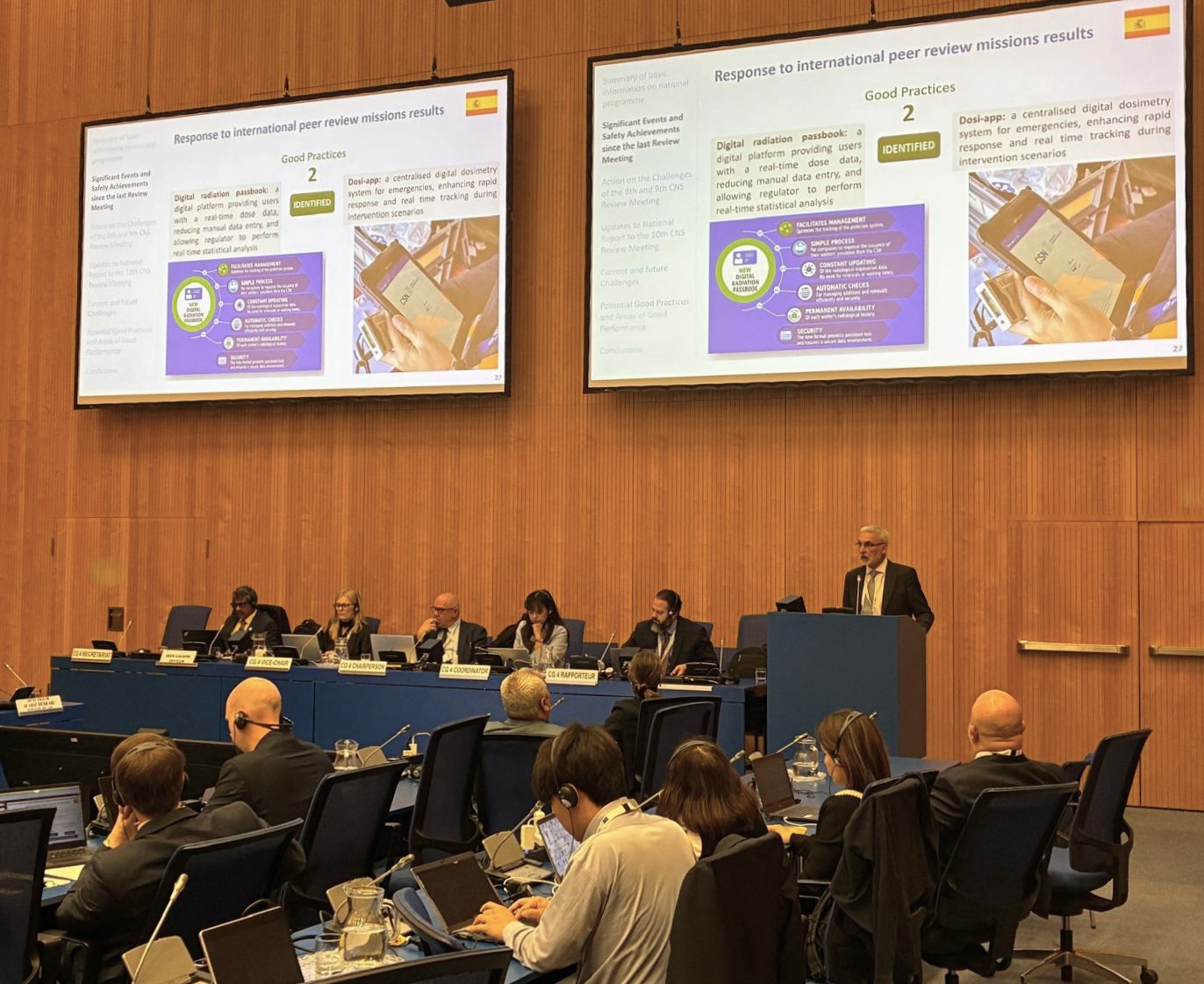
A Spanish delegation including the Spanish Nuclear Safety Council presented in Vienna the results of the 10th National Report under the Convention on Nuclear Safety. This report details the actions and results regarding nuclear safety and radiological protection in nuclear power plants (NPPs) since the previous review meeting of the Convention. The CSN—represented by its President, Juan Carlos Lentijo; Commissioner Javier Dies; and the Technical Director for Nuclear Safety, Teresa Vázquez—participated in the meeting alongside representatives from the Ministry for the Ecological Transition and the Demographic Challenge and the Nuclear Energy Committee, comprising the NPP operating companies.
During Spain’s presentation, the CSN outlined the status of the country’s nuclear programme, the functioning of the regulatory body, and the main actions undertaken to comply with the objectives of the Convention, as well as the challenges identified for Spain at the previous review meeting. The CSN highlighted the high level of safety of Spanish nuclear installations and the systematic application of continuous improvement processes.
Among other aspects, the main regulatory amendments regarding nuclear safety and radiological protection were highlighted. Periodic Safety Reviews (PSRs) was also underscored as a fundamental instrument to guarantee the safe long-term operation (LTO) of nuclear power plants. In this context, the CSN presented the evaluation and supervision work carried out on the plants during this period, which included, among others, the renewal of the operating licence for the Trillo nuclear power plant, as well as the supervision of ageing management and long-term operation programmes across the Spanish nuclear fleet. Likewise, the operators presented the safety improvements incorporated into the nuclear power plants. 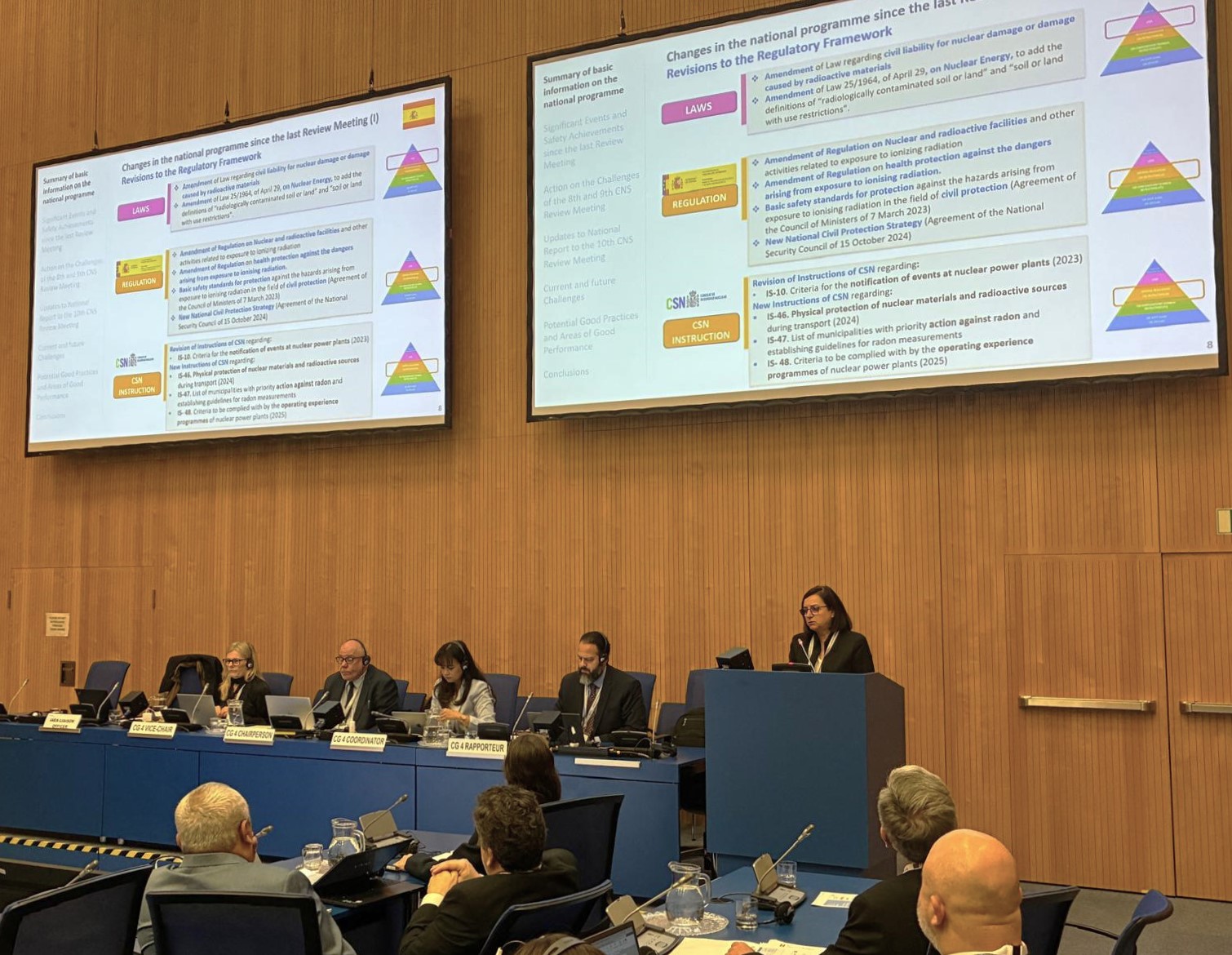
International evaluations and recognised good practices
During this meeting, Spain’s active participation in international peer review missions, both from the IAEA and other international organisations, was also highlighted. Specifically, the CSN reported on the results of the IRRS follow-up mission held in 2025, which closed all the recommendations and suggestions formulated during the combined IRRS‑ARTEMIS mission conducted in 2018.
The Convention's team of experts identified the DOSI-APP tool, used for the centralised and real-time management of emergency responder doses, as a good practice. Furthermore, two areas of good performance were highlighted: the digital radiological passbook and the strategy implemented by nuclear operators to strengthen the safety culture of the service companies working at the plants.
Additionally, other actions were presented, such as the CSN human resources plan for the 2024-2030 period and measures to strengthen the safety culture within the regulator.
The national presentation included an analysis of the main challenges facing nuclear safety in Spain, most notably the safe management of long-term operation and the transition to decommissioning, generational turnover and the attraction of talent, and nuclear safety in the context of climate change. Moreover, the incorporation of new technologies, including artificial intelligence, into regulatory activities was also underlined.
In this context, the CSN announced the main pillars of its Strategic Plan 2026‑2030, aimed at reinforcing the body's supervisory capacity, improving operational efficiency, enhancing emergency preparedness and response, and promoting workforce excellence.
About the Convention
The Convention on Nuclear Safety was signed by Spain on November 15th of 1994. Its objectives include achieving and maintaining a high degree of nuclear safety through the improvement of national measures and international cooperation; the establishment of effective defences in nuclear installations; and the prevention of accidents with radiological consequences and the mitigation of such consequences should they occur.
As a party to the Convention, Spain commits to submitting for examination a report on the measures taken to comply with the obligations arising from the Convention during the corresponding period. The national report is updated every three years and is subjected to a comprehensive peer review process. The CSN acts as the national point of contact and coordinates the drafting of the national reports. In addition to the regulator, the Ministry and the Spanish nuclear power plants participate in the drafting of these reports through the Nuclear Energy Committee of the Spanish Nuclear Industry Forum.